


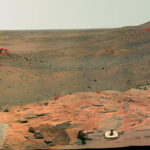


The lunar AI model is an innovative collaboration between IBM and NASA, designed to enhance lunar exploration capabilities. This open-source initiative promises to leverage artificial intelligence for unprecedented advancements in space technology.
What is the lunar AI model?
The lunar AI model developed by IBM and NASA represents a significant advancement in space exploration technology. This innovative model is designed to analyze vast amounts of data collected from lunar missions, enabling researchers to extract meaningful insights about the Moon’s surface, atmosphere, and potential resources.
One of the key features of the lunar AI model is its ability to process and interpret data from various sources, including satellite imagery and sensor readings. By leveraging machine learning algorithms, the model can identify patterns and anomalies that would be difficult for humans to discern. This capability is crucial for planning future lunar missions and ensuring the safety of astronauts.
Furthermore, the lunar AI model is being made available as an open-source tool, allowing researchers and developers worldwide to collaborate and improve upon its functionalities. This open approach fosters innovation and encourages contributions from diverse expertise, potentially leading to breakthroughs in lunar exploration.
In summary, the lunar AI model stands as a testament to the collaborative efforts between IBM and NASA, aiming to enhance our understanding of the Moon and support future exploration initiatives. As the model continues to evolve, its impact on space research and exploration may prove to be transformative.
How does IBM and NASA’s collaboration work?
The collaboration between IBM and NASA on the lunar AI model is a groundbreaking initiative aimed at leveraging artificial intelligence for lunar exploration. This partnership combines NASA’s expertise in space missions with IBM’s advanced technology and AI capabilities.
At the core of their collaboration is a shared vision to create an open-source platform that allows researchers and developers to contribute to the lunar AI model. By making this technology accessible, both organizations hope to foster innovation and enhance the capabilities of lunar missions.
Key components of the collaboration include:
- Data Sharing: NASA provides extensive datasets collected from previous lunar missions, which IBM utilizes to train the AI model.
- AI Development: IBM’s engineers work closely with NASA scientists to refine algorithms that improve decision-making processes for future lunar explorations.
- Community Engagement: The open-source nature of the project invites contributions from global developers, encouraging collaboration and knowledge sharing.
This innovative approach not only enhances the lunar AI model but also builds a community of like-minded individuals dedicated to advancing space exploration through technology.
Benefits of the lunar AI model
The lunar AI model developed by IBM and NASA presents several significant benefits that could transform lunar exploration and research. This innovative approach leverages artificial intelligence to enhance data analysis and decision-making processes, making it an essential tool for scientists and astronauts alike.
Some of the notable advantages of the lunar AI model include:
- Enhanced Data Processing: The model can analyze vast amounts of data collected from lunar missions, enabling researchers to derive insights more quickly and accurately.
- Real-Time Decision Making: By utilizing AI, the lunar AI model assists in real-time decision-making, which is critical for time-sensitive operations during exploration missions.
- Cost Efficiency: The open-source nature of the lunar AI model allows for collaborative development, reducing costs associated with research and technology development.
- Scalability: As new missions are planned, the lunar AI model can be easily adapted to accommodate different data types and mission objectives.
- Interdisciplinary Collaboration: The project encourages collaboration among scientists, engineers, and AI experts, fostering innovation and knowledge sharing.
In conclusion, the lunar AI model stands out as a promising solution for advancing lunar exploration and addressing the challenges faced in this field.
Potential applications in space exploration
The lunar AI model developed by IBM and NASA has the potential to revolutionize space exploration by enhancing various aspects of mission planning and execution. Here are some key applications:
- Autonomous Navigation: The model can enable spacecraft to navigate lunar terrain without constant human oversight, allowing for more efficient exploration missions.
- Data Analysis: By processing vast amounts of data collected from lunar missions, the lunar AI model can identify patterns and anomalies that human analysts might miss, leading to more informed decision-making.
- Resource Management: The model can optimize resource allocation for missions, ensuring that supplies are used effectively and reducing waste during long-duration spaceflights.
- Real-time Problem Solving: With its advanced algorithms, the lunar AI model can provide solutions to unforeseen challenges encountered on the lunar surface, enhancing mission safety and success rates.
- Collaboration with Robotics: The integration of the lunar AI model with robotic systems can facilitate tasks such as construction, maintenance, and scientific experiments on the Moon.
In summary, the lunar AI model stands to significantly improve the efficiency and safety of future space exploration missions, making it a vital tool for innovators in the field.
Challenges faced in AI development
The development of the lunar AI model, a collaborative effort between IBM and NASA, is not without its challenges. As the teams work towards creating an effective solution for space exploration, several hurdles have emerged that could impact the project’s success.
- Data Quality and Availability: One of the primary challenges is the need for high-quality data. The lunar AI model relies on vast amounts of accurate information to train its algorithms. However, obtaining reliable data from lunar missions can be difficult.
- Algorithm Complexity: Designing algorithms that can effectively analyze the unique conditions of the lunar environment presents another significant hurdle. The AI must adapt to various factors such as gravitational differences and extreme temperatures.
- Interdisciplinary Collaboration: The collaboration between IBM and NASA involves experts from diverse fields. Ensuring effective communication and integration of different scientific perspectives can be challenging, potentially slowing the development process.
- Ethical Considerations: As with any AI development, ethical concerns regarding decision-making processes and potential biases in the model must be addressed to ensure responsible usage in space exploration.
Overcoming these challenges will be crucial for the lunar AI model to fulfill its potential and revolutionize future lunar missions.
Future of AI in lunar missions
The future of AI in lunar missions looks promising, especially with the introduction of the lunar AI model by IBM and NASA. This innovative approach aims to enhance the efficiency and effectiveness of space exploration. As we look ahead, several key aspects are likely to shape the role of AI in lunar missions.
- Improved Decision-Making: The lunar AI model is designed to process vast amounts of data quickly, enabling real-time decision-making. This capability will be crucial for managing complex operations on the lunar surface.
- Autonomous Systems: With advancements in AI, future lunar missions may involve greater autonomy for rovers and landers. This shift could reduce the need for constant communication with Earth, allowing for more efficient exploration.
- Data Analysis: The lunar AI model can assist in analyzing geological data, identifying potential resources, and making recommendations for future missions based on findings.
- Collaboration and Innovation: As more organizations contribute to the development of AI technologies, collaboration will lead to innovations that can be applied not only in lunar missions but also in other areas of space exploration.
In summary, the integration of the lunar AI model into lunar missions may redefine our approach to space exploration, offering new opportunities for discovery and innovation.
Photo by Google DeepMind on Pexels