






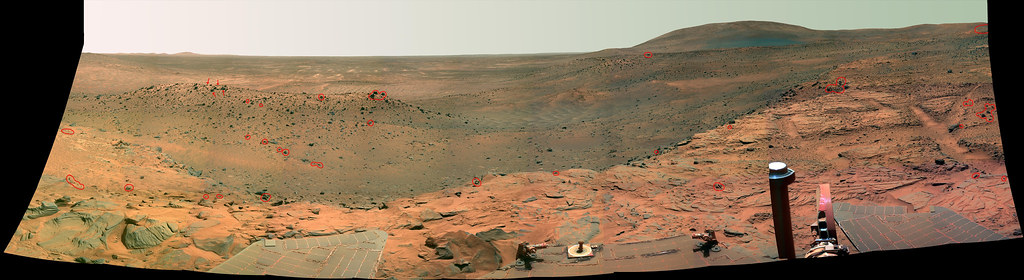
The Mars moon probe is a groundbreaking achievement for Japan, marking its first successful mission to explore the moons of Mars.
Overview of Japan’s Mars Moon Probe Mission
Japan’s Mars moon probe mission marks a significant milestone in space exploration, as it successfully launched the first-ever probe aimed at the Martian moons, Phobos and Deimos. This ambitious project, managed by the Japan Aerospace Exploration Agency (JAXA), seeks to unveil the mysteries surrounding these celestial bodies and provide insights into the formation of the Martian system.
The mission, named MMX (Martian Moons eXploration), is designed to achieve several key objectives:
- Sample Collection: The probe aims to collect surface samples from Phobos, which will be returned to Earth for detailed analysis.
- Orbital Exploration: It will conduct detailed observations of both moons to study their composition and structure.
- Understanding Origins: By examining the Martian moons, scientists hope to gain insights into the history of the solar system, particularly the processes that led to the formation of planets and their satellites.
This mission not only emphasizes Japan’s growing capabilities in spacecraft technology but also paves the way for future exploration endeavors beyond Earth. The successful launch of the Mars moon probe is a testament to Japan’s commitment to advancing human knowledge of our solar system.
Significance of the Mars Moon Probe Launch
The launch of Japan’s Mars moon probe marks a significant milestone in the realm of space exploration. This mission not only showcases Japan’s technological prowess but also enhances our understanding of celestial bodies within our solar system.
The significance of the Mars moon probe can be highlighted through several key points:
- Scientific Exploration: The probe aims to study Phobos and Deimos, Mars’ two moons, which could provide insights into the formation and evolution of the Martian system.
- Technological Advancement: This mission exemplifies Japan’s advancements in spacecraft technology, demonstrating capabilities that could be pivotal for future interplanetary missions.
- International Collaboration: The Mars moon probe is expected to foster collaboration among various space agencies, paving the way for shared knowledge and resources in the exploration of Mars.
- Inspiration for Future Generations: Successful missions like this inspire young scientists and engineers, igniting interest in STEM fields and space exploration.
As Japan embarks on this groundbreaking mission, the global space community watches closely, hopeful for the discoveries that lie ahead.
Mars moon probe: What to Expect from the Mission
The Mars moon probe is designed to provide valuable insights into the moons of Mars, Phobos and Deimos. As Japan embarks on this groundbreaking mission, scientists and researchers are eager to uncover the mysteries that these celestial bodies hold.
Key objectives of the mission include:
- Surface Analysis: The probe will analyze the surface composition of Phobos and Deimos to determine their origins and evolution.
- Atmospheric Studies: Investigating any exosphere or atmosphere present around these moons can shed light on their physical characteristics.
- Potential Resource Identification: By identifying resources such as water ice, the mission could open new possibilities for future human exploration and habitation.
Additionally, the Mars moon probe will utilize advanced imaging technology to capture high-resolution photographs, contributing to a comprehensive understanding of the moons’ geology.
As Japan’s space agency continues to push the boundaries of exploration, the findings from this mission could significantly enhance our knowledge of not only Mars but also its surrounding environment.
Challenges Faced in Space Exploration
While Japan’s Mars moon probe mission marks a significant achievement in space exploration, it has not been without its challenges. The journey to the Red Planet’s moons, Phobos and Deimos, poses a range of difficulties that scientists and engineers must navigate.
- Technological hurdles: Developing the advanced technology necessary for the probe to travel millions of kilometers and gather data requires immense resources and expertise. Each component, from propulsion systems to communication tools, must function flawlessly in the harsh space environment.
- Funding and resources: Securing adequate funding for such ambitious projects can be a constant struggle. Japan’s space agencies need to demonstrate the mission’s value to attract investments amidst competing priorities.
- Launch precision: The success of the Mars moon probe relies heavily on precise launch timing. Any delays or miscalculations could jeopardize the mission, making intricate planning essential.
- Environmental factors: Space missions face unpredictable challenges such as cosmic radiation and micrometeorite impacts, which can threaten the probe’s integrity and mission objectives.
Despite these obstacles, Japan’s commitment to overcoming them underscores its dedication to advancing knowledge of Mars and its moons.
Future of Mars Exploration
The future of Mars exploration looks promising, especially with the successful launch of Japan’s Mars moon probe. This mission not only paves the way for future endeavors but also sets a benchmark for international collaboration in space research.
As scientists and engineers analyze the data collected from the probe, several key objectives are anticipated:
- Understanding Phobos and Deimos: The Mars moon probe aims to uncover the mysteries surrounding Mars’ moons, Phobos and Deimos, including their origins and compositions.
- Potential Resource Utilization: Insights gained could inform future missions about the potential resources available on these moons, which might be crucial for sustaining human life on Mars.
- Technological Advancements: The development of advanced technologies for deep space exploration will likely benefit future missions beyond Mars, enhancing our capabilities in exploring other celestial bodies.
- International Collaboration: Japan’s success can inspire further partnerships among space agencies worldwide, fostering a united approach to tackling the complexities of space exploration.
Overall, the journey of Japan’s Mars moon probe marks a significant chapter in the ongoing saga of space exploration, promising exciting discoveries ahead.
By DragonRal via Openverse