
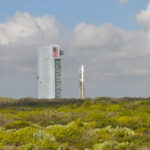

NVS-03 Mission is significantly enhancing India’s navigation capabilities, showcasing advancements in space technology and precision.
Overview of NVS-03 Mission
The NVS-03 Mission represents a significant advancement in India’s satellite navigation capabilities. Launched successfully, this mission aims to enhance the accuracy and reliability of navigational services across the country and beyond. The NVS-03 satellite is part of the NavIC constellation, which is designed to provide precise positioning and timing information to users in India and the surrounding region.
This mission is particularly crucial for various sectors, including transportation, agriculture, and disaster management. The enhanced capabilities offered by the NVS-03 will support applications such as:
- Improved road and rail navigation
- Efficient fleet management
- Accurate agricultural monitoring
- Effective disaster response coordination
Furthermore, the NVS-03 satellite is equipped with advanced technologies that ensure robust performance in various environmental conditions. The mission underscores India’s commitment to strengthening its position as a key player in global satellite navigation systems. With these developments, the NVS-03 Mission is set to play a pivotal role in enhancing both civilian and strategic navigation capabilities for the nation.
Key Features of the NVS-03 Satellite
The NVS-03 Mission showcases several key features that significantly enhance India’s navigation capabilities. This advanced satellite is equipped with state-of-the-art technology designed to provide accurate positioning services across the nation and beyond.
- High Accuracy: The NVS-03 satellite offers improved positional accuracy, ensuring reliable navigation for various applications, including transportation and logistics.
- Enhanced Signal Strength: With increased signal strength, the satellite can penetrate urban environments and dense foliage, providing uninterrupted service to users.
- Indigenous Technology: Developed using homegrown technology, the NVS-03 Mission exemplifies India’s commitment to achieving self-reliance in space technology.
- Multi-Functional Capabilities: The satellite supports multiple applications ranging from civil to military, catering to a wide array of users.
- Robust Security Features: The NVS-03 is designed with enhanced security measures, ensuring the integrity of navigation data against potential threats.
These features position the NVS-03 Mission as a pivotal element in advancing India’s navigation infrastructure, promising significant benefits for users across various sectors.
Impact on India’s Navigation Systems
The NVS-03 Mission is set to significantly enhance India’s navigation systems, providing crucial advancements in accuracy and reliability. With its state-of-the-art technology, the mission aims to improve not only civilian navigation but also defense applications, fostering a secure and efficient framework for diverse sectors.
One of the primary impacts of the NVS-03 Mission is the enhancement of the Indian Regional Navigation Satellite System (IRNSS), which is instrumental for applications such as:
- Transportation and logistics: Improved route planning and tracking for vehicles and goods.
- Agriculture: Better precision farming techniques, optimizing crop production.
- Telecommunications: More reliable timing signals for mobile networks.
- Disaster management: Enhanced capabilities for real-time monitoring and response.
The deployment of the NVS-03 satellite also signifies India’s commitment to maintaining a competitive edge in the global navigation landscape. By reducing dependence on foreign navigation systems, India is taking significant strides toward self-reliance in technology and infrastructure, ultimately benefiting its economy and national security.
Technological Innovations in NVS-03
The NVS-03 Mission represents a significant leap in technological advancements for satellite navigation systems. This mission incorporates cutting-edge innovations aimed at enhancing the precision and reliability of navigation services across India.
One of the standout features of the NVS-03 satellite is its advanced signal technology. With the ability to transmit multi-frequency signals, it ensures more accurate positioning for users, ranging from civilian to military applications. Additionally, the satellite is equipped with improved atomic clocks that provide exceptional timing accuracy, which is crucial for GPS functionality.
The mission also emphasizes enhanced robustness against various interferences. The NVS-03 has been designed to operate in challenging environments, ensuring consistent performance even in urban settings where signal disruption is common. Furthermore, the integration of new algorithms allows for faster data processing and improved signal integrity.
Overall, the NVS-03 Mission not only strengthens India’s navigation capabilities but also showcases the country’s commitment to staying at the forefront of satellite technology. This proactive approach paves the way for a more connected future, benefiting numerous sectors including transportation, agriculture, and disaster management.
Future Prospects for Indian Navigation
The future prospects for Indian navigation systems are significantly enhanced by the NVS-03 Mission. As India continues to develop its satellite navigation capabilities, the advancements from this mission pave the way for improved accuracy and reliability in various applications.
One of the most promising aspects is the potential integration of NVS-03 with emerging technologies. This integration could lead to:
- Smart Transportation: Enhanced navigation for vehicles, reducing traffic congestion and improving safety.
- Precision Agriculture: Farmers can utilize advanced navigation data for better crop management and resource allocation.
- Disaster Management: Accurate positioning can aid in emergency response and recovery efforts during natural disasters.
- Urban Planning: City planners can leverage improved navigation data for efficient infrastructure development.
Moreover, as the demand for location-based services grows, the NVS-03 Mission will play a critical role in supporting industries such as logistics, telecommunications, and tourism. With ongoing investments in satellite technology, India is poised to establish itself as a leader in navigation solutions. The NVS-03 Mission is a crucial step towards achieving this ambitious goal.
International Comparisons in Navigation Technology
The NVS-03 Mission positions India among the leaders in navigation technology, especially when compared to global counterparts. Several countries have established sophisticated navigation systems, each with unique features and capabilities.
For instance, the United States operates the Global Positioning System (GPS), which has been the gold standard for decades. Its accuracy and reliability have set benchmarks for other nations. Similarly, the European Union has developed the Galileo system, which emphasizes precision and is designed to provide enhanced services over GPS.
In Asia, China’s BeiDou system has rapidly advanced, offering services not just within its borders but also across the globe. Its growing user base highlights the competitive landscape in navigation technology.
India’s NVS-03 Mission aims to bridge the gap by providing reliable navigation services tailored to the country’s unique needs. With its advanced features and capabilities, the NVS-03 satellite enhances India’s strategic position in the realm of navigation.
Through continuous upgrades and innovations, India intends to not only match but potentially surpass other international navigation systems, ensuring robust and precise navigation capabilities for its users.
Conclusion on NVS-03 Mission’s Importance
In conclusion, the NVS-03 Mission represents a significant advancement in India’s navigation capabilities, solidifying the nation’s position in the global navigation satellite system arena. With its state-of-the-art technology and improved features, the NVS-03 satellite is expected to enhance accuracy, reliability, and coverage for users across the country.
Moreover, the mission not only supports civilian applications but also strengthens strategic and defense operations, showcasing its multifaceted importance. As India continues to develop its navigation systems, the NVS-03 Mission serves as a cornerstone for future advancements, providing essential services for a range of sectors including transportation, telecommunications, and disaster management.
The technological innovations embedded within the NVS-03 Mission further demonstrate India’s commitment to maintaining a competitive edge in the navigation domain. By investing in such cutting-edge technology, India is not only improving its own navigation capabilities but is also setting a benchmark for other nations.
As the NVS-03 Mission unfolds, its impact will be closely monitored, and its contributions to both national and international navigation systems will undoubtedly be profound.